
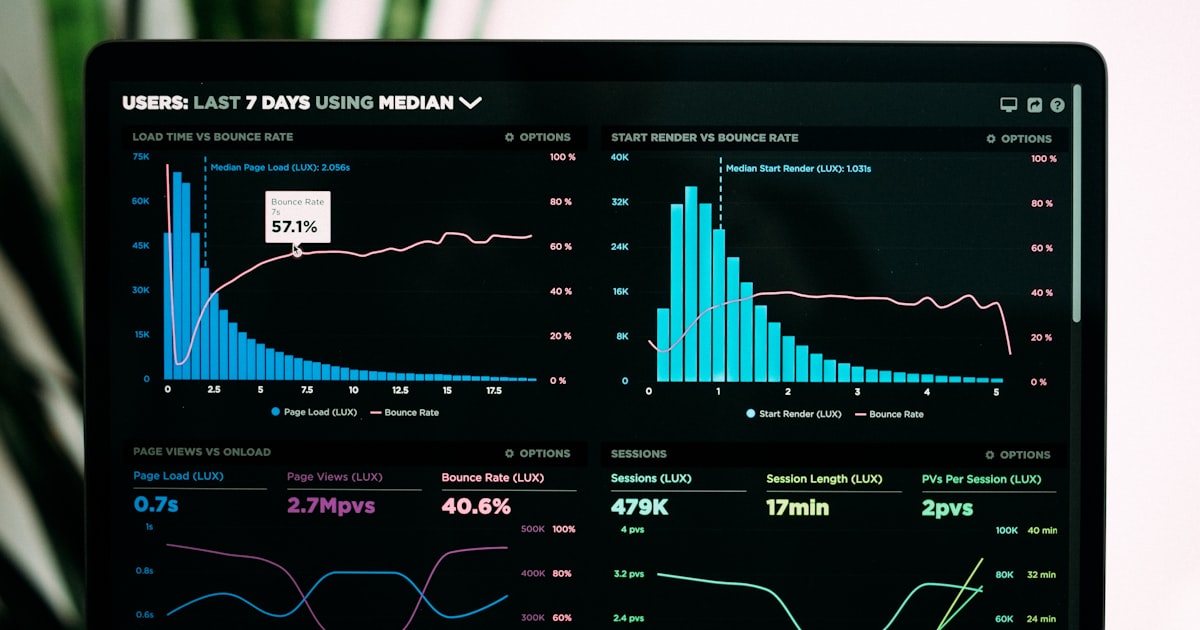
Real-Time Core Web Vitals Monitoring for Growing Sites
A single performance report is useful. It is not enough.
If your site changes often, performance can drift without anyone noticing. A new script, a heavier hero section, a chat widget, a CMS update, or a tracking change can quietly turn a healthy page into a slower one.
That is why Core Web Vitals monitoring matters more than occasional spot checks once your website starts carrying real commercial weight.
Why one-time checks stop being enough
A one-off test gives you a snapshot. Snapshots are fine for a launch review or a quick audit, but they miss the main thing that hurts most websites: regression over time.
Sites rarely become slow in one dramatic moment. More often they get slower in layers:
- one third-party script,
- one uncompressed image block,
- one template tweak,
- one extra widget.
By the time someone notices, rankings, conversion, or lead quality may already be affected.
Core Web Vitals worth monitoring continuously
The three headline metrics are still the ones that matter most:
- LCP for loading,
- INP for responsiveness,
- CLS for visual stability.
If your team needs the plain-English version first, read Core Web Vitals explained for non-technical teams.
Real-user data changes the conversation
This is where monitoring becomes genuinely useful.
Lab tools simulate a visit under predefined conditions. That is helpful for debugging, but real-user monitoring tells you what actual visitors experience:
- on real devices,
- in real countries,
- on real connections,
- across real templates.
That is a different level of signal. It moves the conversation away from "the score looked okay yesterday" toward "users on mobile product pages are getting worse INP this week."
What you actually want from monitoring
Good performance monitoring is not just a graph.
You want to know:
- when a metric degrades,
- which pages or templates are affected,
- whether the issue is new or ongoing,
- and whether the change is big enough to matter commercially.
Without that, teams tend to discover issues too late or spend time looking at noise.
Common situations where monitoring pays off
After launches or redesigns
Launches create risk because multiple systems change at once. A checklist helps before go-live, but monitoring catches what slips through afterwards. That is why we recommend pairing it with a launch checklist.
On content-heavy sites
If you publish frequently, templates and embeds can create inconsistent performance between pages.
On sites with multiple integrations
Chat tools, analytics, consent managers, review widgets, and testing tools all add weight. Individually they can look harmless. Together they change how the site behaves.
On lead-generation sites
If the website drives revenue, performance is not academic. A slower or less responsive page can quietly reduce form completions and demo requests.
A practical workflow
Here is the simplest useful approach:
- Run a baseline check with the performance checker.
- Identify your highest-value templates and landing pages.
- Track LCP, INP, and CLS over time.
- Set alerts for meaningful regressions.
- Review changes alongside releases, campaigns, or new integrations.
That makes performance something you can manage, not just react to.
Where Weaking fits
Weaking is useful here because Monitoring is not limited to simulated audits. It also brings real-user monitoring into the picture, which is what helps small teams see whether performance is degrading in the wild rather than only in test environments.
That matters when the business question is not:
"Can we produce a score?"
but rather:
"Are visitors getting a worse experience this week than last week?"
Monitoring and SEO
Core Web Vitals are not the only ranking factor, but they are one of the clearest experience signals Google uses. More importantly, weak performance usually comes bundled with weaker usability and lower conversion confidence.
That is why performance should sit inside a wider technical SEO process, not beside it. If you need the full structure, this complete SEO audit guide covers where performance fits alongside crawlability, indexing, and site structure.
When you do not need advanced monitoring yet
Not every site needs a heavy setup from day one.
If your site is small and changes rarely, occasional manual reviews may be enough. In that case, a quick audit through the free analyzer can be a sensible first step.
Monitoring becomes more valuable when:
- the site changes regularly,
- multiple people touch templates or scripts,
- organic traffic already matters,
- or performance issues have happened before.
Next steps
- Use the performance checker for a baseline.
- Decide which pages matter most commercially and monitor those first.
- Track trends, not isolated scores.
- Use Monitoring if performance regressions would cost you traffic or leads.
FAQ
Is PageSpeed Insights enough on its own?
It is useful for snapshots and debugging, but it is not a full monitoring system.
What is the difference between lab and real-user monitoring?
Lab tests simulate visits. Real-user monitoring reflects what actual visitors experience on your live site.
How often should Core Web Vitals be reviewed?
Continuously if the site changes often. At minimum, after launches, template changes, or new third-party integrations.
Do small businesses really need monitoring?
Not always immediately. But once the site is a meaningful lead channel, catching regressions early becomes much more valuable.